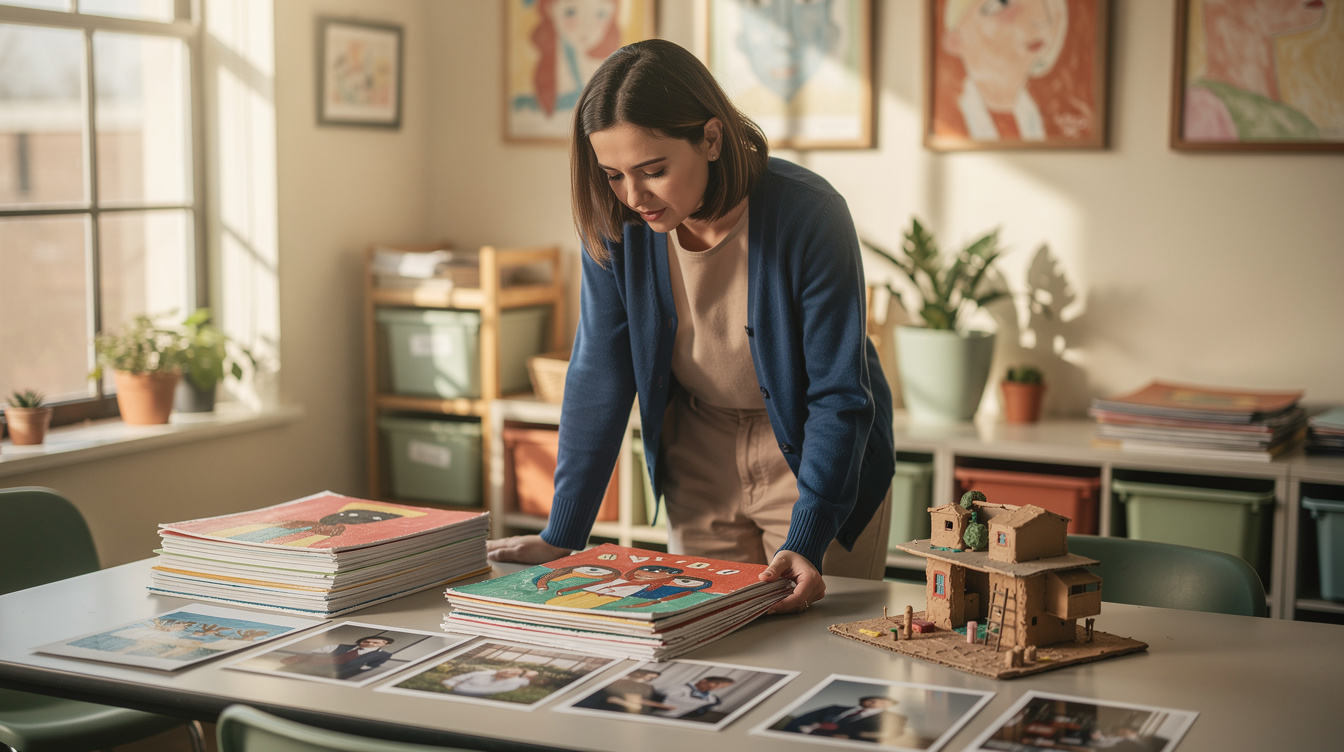
The first time I tried to grade an open-ended art project with a standard content rubric, I ended up scoring "used three colors" like it meant something. It didn't. Creative work needs a rubric that judges craft and process, not a checklist that pretends there's one correct painting, podcast, or short film hiding out there that everyone should have made.
Why a content rubric fails here
A rubric built for a lab report or an essay assumes a target: the right conclusion, the right thesis. Creative projects don't have that target, and forcing one onto them either punishes originality or makes the rubric so vague it doesn't actually guide anyone. Students end up guessing what you want instead of making something real.
What to score instead
Score the things that are genuinely visible in any creative product, regardless of medium:
- Intentionality — can the student explain a choice they made and why, even if you'd have made it differently?
- Craft and technique — did they execute the skills you actually taught this unit, not just "is it good"?
- Use of feedback — is there evidence they revised based on a critique or a draft round, not just first-attempt work?
- Completion of the constraints you set — length, format, required elements — separate from artistic judgment.
- Reflection — a short artist's statement or process note showing they can talk about their own work.
Notice none of these require you to personally like the piece. That's the point. You're scoring process and craft, not taste.
Building it with AI without losing your standards
Start with your own unit's skill list, not a generic rubric template. Prompt something like: "Here are the techniques I taught in this unit: [list them]. Build a 4-point rubric that scores intentionality, craft, use of feedback, and reflection for an open-ended creative project. Each row should describe what a 4, 3, 2, and 1 actually look like in observable terms, not just 'excellent' or 'poor.'"
The output will be generic on the first pass. Your job is to replace vague descriptors with specifics from your actual classroom: what does "strong craft" mean for a stop-motion animation versus a spoken-word poem? Swap in your unit's real vocabulary before you hand it to students.
Share the rubric before the project starts, not after
This sounds obvious, but creative rubrics get treated as an afterthought more than content ones do, because teachers assume creative work is graded "on feel." If students see the rubric on day one, "intentionality" stops being a mystery category and becomes something they can point to in their own artist's statement: "I chose a minor key here because the scene needed tension."
Build the actual [grading rubric](/grading-rubric) once, save it, and reuse the same four categories across every open-ended project this year, adjusting only the craft row for the specific skills of that unit. Consistency across projects is what teaches students the rubric is real, not decoration.
The trade-off you're making
A craft-and-process rubric will sometimes give a high score to a project you personally don't love, and a lower score to one that's visually impressive but skipped every step of the process. That's uncomfortable the first few times. It's also the only way to grade creative work fairly, because it separates "did they do the work well" from "do I like their aesthetic choices" — two questions that have no business sharing a grade.