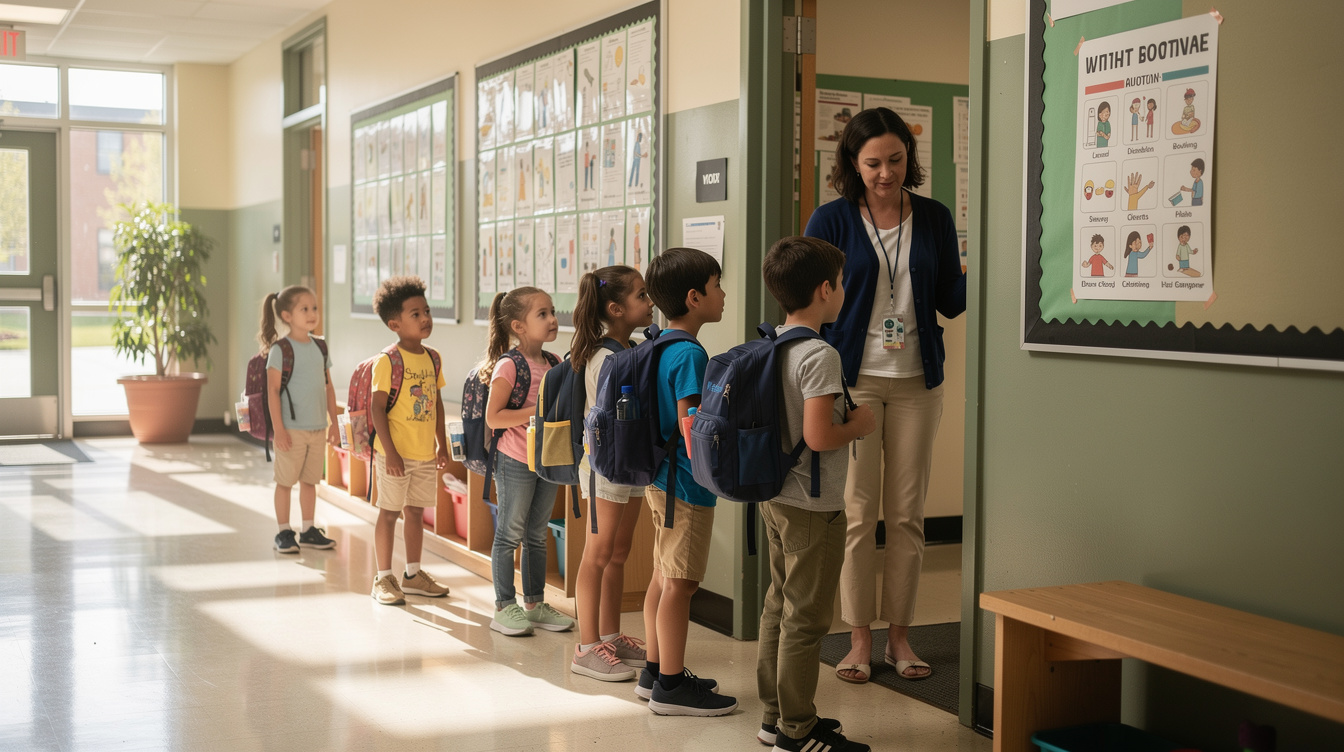
Day two of the school year, every procedure you taught works perfectly. Students line up quietly, turn in papers to the right tray, and raise their hands before speaking. By week three, half of it has quietly fallen apart, and you're re-teaching the same routine you already spent twenty minutes on in August.
Why procedures decay so fast
It's not that students forget the steps. It's that the procedure was only ever practiced once, under ideal conditions, with your full attention on it. Once your attention moves on to actual content, the procedure stops getting reinforced and drifts back toward whatever's easiest for a room full of kids in the moment, usually louder and slower than what you taught.
The fix isn't teaching it better the first time. It's re-teaching it on a schedule.
Most procedures need a full re-teach, not just a reminder, around day 10 and again around day 20. That's not a sign you did it wrong in August, it's just how habits form for a group of 25+ people who didn't choose to be in the room together.
Try this cadence:
1. Day 1-2: Teach the procedure explicitly, model it, have students practice it once with narration ("watch how quietly we're doing this").
2. Day 10: Re-teach cold, as if new, no "remember how we..." framing, just do it again start to finish.
3. Day 20: Spot-check only the step that's breaking down (usually one specific moment, like the transition into the line, not the whole procedure) and re-teach just that piece.
What actually breaks down first
In most classrooms, it's not the big visible procedures like lining up, it's the small transition moments nobody explicitly teaches: what happens in the 90 seconds after you finish giving instructions and before everyone's actually started, or what a student does the moment they finish an assignment early. Naming that specific gap moment and giving it one explicit step ("when you finish, put your pencil down and start on the challenge card in the blue folder") closes more chaos than re-teaching the whole routine again.
Using AI to build the re-teach script, not the procedure itself
You already know your procedures, you don't need AI to invent classroom management for you. What it's actually useful for is turning a messy list of "the things that keep breaking down" into a tight, two-minute re-teach script you can run on day 10 without winging it. Paste in: "Here are the three procedure steps that are breaking down in my class: [list them]. Write a 90-second re-teach script for each, direct instructions a teacher would say out loud to a room of second graders, no filler." You'll get something you can actually read off a sticky note, which matters more than it sounds like when you're mid-transition and don't have time to improvise.
A written [classroom management plan](/classroom-management) built around routines, not just consequences, gives you the base procedures to start from. The re-teach schedule above is what keeps that plan from quietly eroding by Halloween.
A quick example that shows the difference
"Be respectful during partner work" is not a procedure, it's a value. A procedure version: "When your partner is talking, your eyes are on them and your hands are on your own paper. If you disagree, wait until they finish, then say 'I see it differently because...'" Vague values fade fast. Specific, practiced, re-taught steps are what's still visible in the room in November.